3 Gentle Ways to Ease Your Senior Dog's Morning Stiffness
Paw Pulses Team · · 2 min read
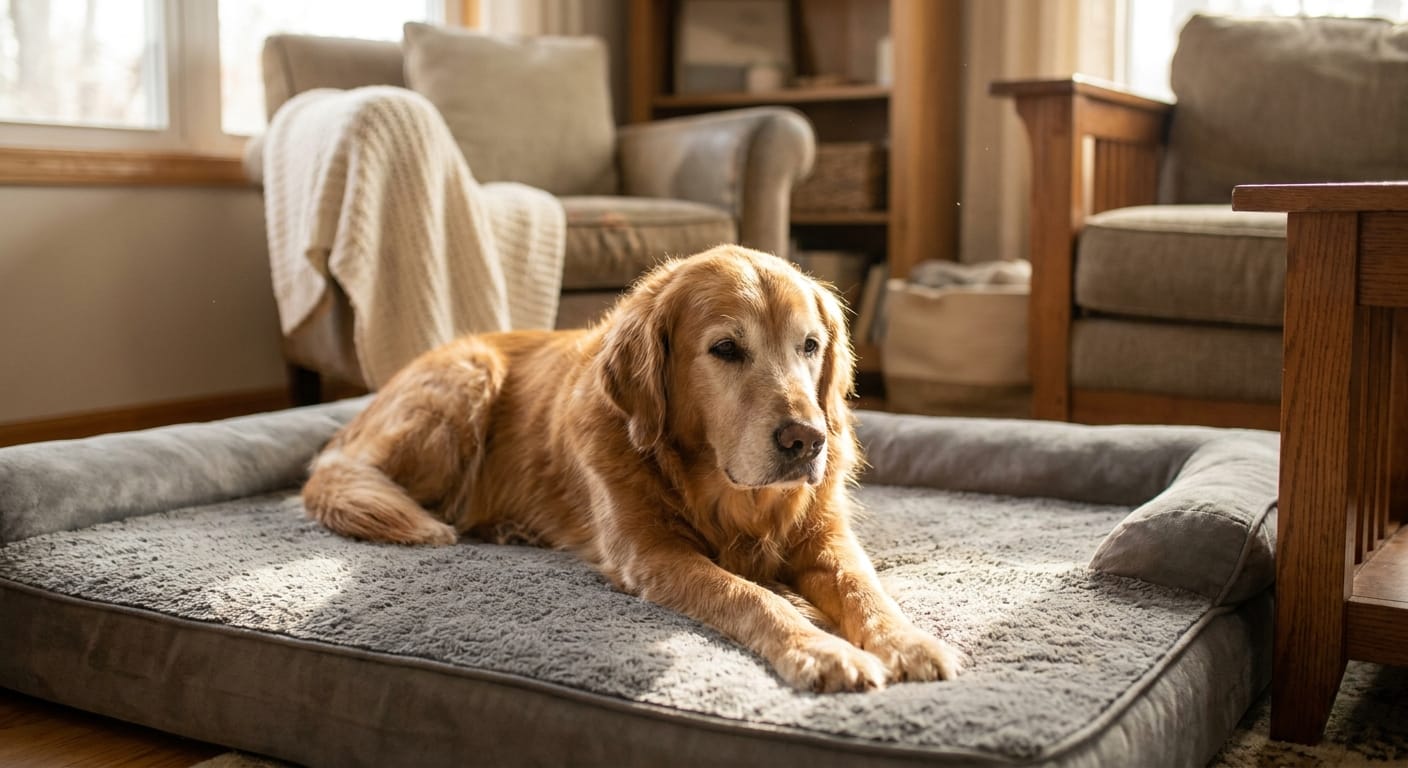
Mornings can be the hardest part of the day for a senior dog. That slow rise from the bed, the careful first steps, a brief pause before stretching — these small moments tell us a lot about how their joints are feeling. The good news: with a few thoughtful changes to your routine, you can help your gray-muzzled best friend start the day more comfortably.
Here are three gentle, on-the-ground tips to ease morning joint stiffness in older dogs.
1. Start with a Slow Warm-Up Walk
Just like us, dogs need a little time for their joints to warm up — especially as they age. Instead of heading straight out for a brisk walk, give your senior pup a few minutes of easy movement first.
- Begin with a short, slow stroll around the house or yard before any longer outing.
- Keep the first 5–10 minutes at a relaxed, sniff-friendly pace.
- Skip the stairs and jumping right after waking — let muscles ease into motion.
A gentle warm-up helps blood flow return to stiff joints and softens the transition from rest to activity.
2. Upgrade to Supportive Orthopedic Bedding
Where your dog sleeps matters more than ever in their senior years. A soft, sagging bed can leave joints unsupported through the night, making mornings noticeably harder.
- Look for an orthopedic bed with high-density or memory foam that cradles hips, shoulders, and elbows.
- Place the bed in a warm, draft-free spot — cold floors can stiffen joints overnight.
- Choose a low-profile design that's easy to step into without climbing.
Better rest means a gentler wake-up — and a dog who feels more ready to greet the day.
3. Talk to Your Vet About Joint Support
Many senior dogs benefit from joint-support strategies tailored to their needs, but every dog is different. Your veterinarian can help you build a plan that fits your companion's age, breed, weight, and overall health.
- Ask about joint supplements with ingredients like glucosamine, chondroitin, or omega-3 fatty acids.
- Discuss weight management — even a small reduction can ease pressure on aging joints.
- Mention any new stiffness, limping, or hesitation early — small changes often have simple solutions when caught soon.
A vet-guided approach makes sure any added support fits safely alongside the rest of your dog's care.
Small Changes, Big Comfort
Aging is a privilege our dogs earn through a lifetime of loyalty. With a slower warm-up, a supportive bed, and a good conversation with your vet, you can help your senior dog meet each morning with a little more ease — and a lot more tail-wagging.
Because every gray muzzle deserves a soft start to the day.