My Senior Dog Won't Eat But Acts Normal: 7 Vet-Backed Reasons (And When to Worry)
Paw Pulses Team · · 13 min read
By Paw Pulses · ~10 min read · Updated May 2026
Affiliate disclosure: Some links in this article are affiliate links. If you buy through them, we earn a small commission at no extra cost to you. We only recommend products we'd give our own senior dogs. Full policy: pawpulses.com/affiliate-disclosure.
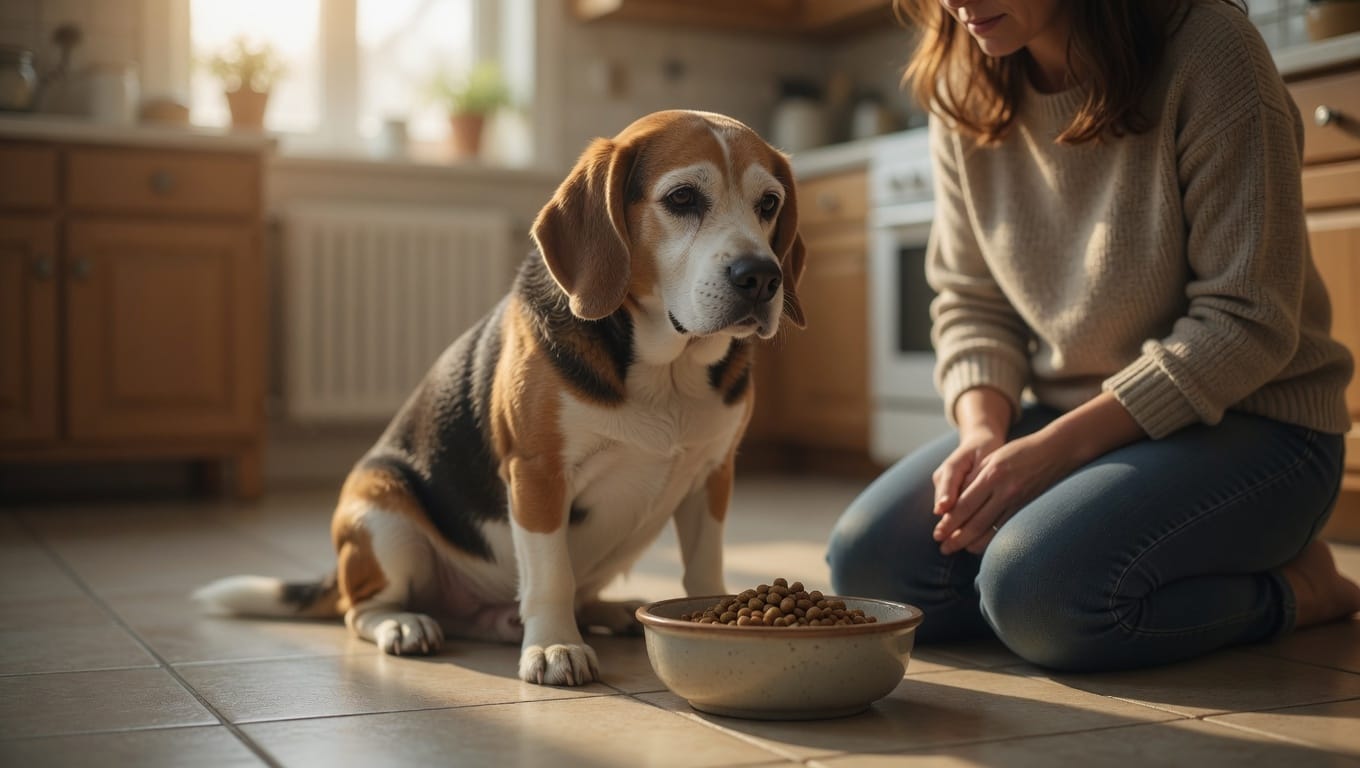
You set the bowl down. Your senior dog walks over, sniffs, looks at you, and walks away. She acts otherwise normal — tail wagging, no whimpering, ready for her walk — but the food is still in the bowl an hour later. Maybe two hours. Maybe she comes back and picks at it half-heartedly, or maybe she doesn't.
If you've Googled "my senior dog won't eat but acts normal" at 11 PM with a worried-but-not-panicking pit in your stomach, this guide is for you. The honest version is more reassuring than most articles will tell you upfront: the majority of cases of intermittent picky eating in senior dogs trace to a small number of benign causes that resolve in 24-48 hours with simple at-home interventions. The minority that don't are also identifiable — and we'll cover when to stop self-managing and call your vet.
Here are the seven most common reasons a senior dog turns down food while otherwise acting like herself, in roughly the order they appear in real cases. Each one comes with what to try at home and when the cause warrants a vet visit instead.
If you'd rather skip ahead to what often helps fastest:
- First-line meal topper for picky seniors: Stella & Chewy's Meal Mixers — sprinkle 2-3 tablespoons on her existing food
- Best probiotic for mild GI upset: Purina FortiFlora — the strain (SF68) most-studied in dogs, comes as a flavored powder
- Best low-sodium bone broth (no onions): Brutus Bone Broth for Dogs — pour a quarter cup over food to revive interest
- Best sensitive-stomach food for chronic pickiness: Hill's Science Diet Senior Sensitive Stomach
- Best wellness tracker: Our free 1-page Senior Dog Wellness Checklist — including a daily eating log
Now the actual reasons.
1. Dental pain — the most common, most overlooked cause
This is the cause that vets see most often in senior pickiness, and the cause owners are least likely to suspect.
Periodontal disease is one of the most common conditions in dogs — most show some degree of it by age 3, and severity typically increases dramatically by senior age. Gum inflammation, tartar buildup, cracked or infected teeth: by the time your dog is over 8, the cumulative damage is often significant. The discomfort during chewing isn't always severe enough for the dog to vocalize, but it's enough to make her hesitate at hard kibble or chew on one side of her mouth.
What you might notice (besides the picky eating):
- Eating more slowly than usual
- Dropping kibble out of her mouth
- Preferring soft food over kibble suddenly
- Favoring one side when she chews
- Bad breath that's stronger than her baseline
- Pawing at her face or rubbing it on furniture
What to do: First check — gently lift her lip while she's relaxed and look at her gums and back teeth. Are the gums red along the tooth line? Is there visible tartar (brown buildup)? Does anything look fractured? If yes, this is a vet visit, not a home-fix. Periodontal disease is genuinely painful and progressive — it doesn't resolve on its own.
If her teeth look fine, you can test the dental theory by switching her temporarily to softer food (canned, or kibble soaked in warm water) for 2-3 days. If she eats normally on soft food but not kibble, the issue is dental.
2. Reduced sense of smell — the silent age change
Dogs eat with their nose first. The aroma of food triggers appetite far more than taste does — a dog with a working nose can eat almost anything; a dog with a fading nose loses interest in food she used to love.
Senior dogs experience olfactory decline starting around age 8-9, and it's almost always invisible to the owner because dogs don't show it the way humans show vision loss. They just gradually become pickier, slower to start meals, and less excited at meal times.
The fix is mechanical: warm the food up. Heat releases aromatic compounds, which bypasses the nose-decline problem and makes the food smell stronger even if her nose is less sensitive than it used to be.
What to do:
- Add a quarter cup of warm (not hot) water to her existing food, let it sit for 30 seconds, then serve
- Microwave wet food for 5-10 seconds to warm it (bring it to room temperature, never hot)
- Add a meal topper — 2-3 tablespoons of strongly-aromatic freeze-dried meat sprinkled on top
- A splash of low-sodium bone broth (no onions) is among the most reliable appetite-revivers for senior dogs
If her appetite returns reliably with warmed/topped food, this is most likely olfactory decline — fully manageable, not a medical emergency, just a permanent meal-prep change going forward.
3. Mild GI upset — the 24-hour cause
Sometimes a senior dog's stomach is just having a quiet bad day. She's not vomiting, she doesn't seem sick, but something internally is off and food is unappealing.
Common triggers:
- A high-fat treat the day before (her older pancreas can't handle what it used to)
- A new bag of food where the formula was reformulated
- Got into something in the yard you didn't notice
- Mild dehydration
- A subtle anxiety event (mail carrier, neighbor's dog, change in your schedule)
The 24-hour rule: A healthy senior dog can safely skip one meal — sometimes two — without medical concern, as long as she's drinking water and otherwise acting normal. Most mild GI upset resolves within 24 hours.
What to do:
- Pull her food bowl after 30 minutes if she hasn't eaten. Don't leave it out — it teaches her to keep snubbing it.
- Make sure water is fresh and accessible
- Give her gut a break — skip dinner if she's skipped lunch, then offer a bland meal of plain boiled chicken + plain white rice (one part chicken, two parts rice) at the next mealtime
- Add a probiotic like FortiFlora for the next 5-7 days while her gut resets
- If she's still refusing food after 24 hours, escalate to your vet
4. Food fatigue or brand reformulation
Senior dogs are creatures of habit — but they can also burn out on a flavor they've eaten for years, especially as their taste buds shift with age. And sometimes the dog isn't being picky; the food changed.
Pet food manufacturers reformulate their recipes more often than owners realize. The bag looks identical, but the underlying formula has shifted (different protein source, different fat percentage, different fiber blend). Some senior dogs are sensitive enough to notice.
What to do:
- Check the bag of food. Is this from a new bag you just opened? If yes, compare it to your last bag — sometimes a faint difference in color, smell, or kibble shape signals a reformulation.
- Try a different protein source for one week. If she's been on chicken for years, try a fish-based or duck-based formula. Sometimes the appetite returns immediately.
- For an honest food change, do a slow transition (10-14 days) — never abrupt. Senior digestive systems don't handle abrupt switches well.
Hill's Science Diet Senior Sensitive Stomach is a reliable transition target if you're trying something new — formulated for older dogs, highly digestible, and palatable enough that most senior dogs accept it without complaint.
5. Recent stress event — the often-missed trigger
Dogs lose their appetite when stressed, and senior dogs are more sensitive to environmental change than younger dogs. Things that wouldn't have phased her at age 5 can disrupt her appetite at age 12.
Common stress triggers:
- A move or significant home rearrangement
- A new pet, child, or roommate
- A schedule change (your work hours shifted, vacations, holidays)
- Construction or loud noise nearby
- A new neighbor or new dog next door
- A recent vet visit
- A boarding stay, even a short one
- Loss of another pet in the household
What to do:
- Audit the past 1-2 weeks for any of the above
- Maintain her routine as strictly as possible — same meal times, same walk schedule, same sleeping location
- Reduce the number of "new" things in her environment temporarily
- Consider a calming probiotic supplement — formulated specifically for stress-related digestive disruption (Calming Care is a distinct product from regular FortiFlora)
- Most stress-related appetite loss resolves within 5-7 days as the dog adjusts. If it doesn't, escalate to your vet.
6. Medication side effect
If your senior dog started a new medication recently — or her dose changed — appetite changes are a common side effect that vets often forget to flag.
The medications most associated with appetite reduction in senior dogs:
- NSAIDs (Carprofen, Meloxicam, Galliprant) — can cause nausea or stomach upset
- Tramadol or other opioid pain meds — often reduce appetite significantly
- Antibiotics — disrupt gut flora, often cause picky eating during the course
- Steroids (prednisone) — paradoxically can either increase or decrease appetite depending on the dog
- Heart medications (Pimobendan, Furosemide) — appetite changes are listed but often unreported
What to do:
- Look at the timing — did the appetite change start within 1-2 weeks of starting (or changing dose of) any medication?
- Don't stop medication without talking to your vet, but DO call them and report the appetite change. Often there's an alternative or a way to give the medication with food that helps.
- For NSAIDs especially, never give them on an empty stomach — give with a meal or a meal-topper to reduce GI side effects.
- Probiotics can help reset gut flora after antibiotic courses — Pet Honesty Probiotic Chews for daily use, FortiFlora for clinical-grade rescue.
7. Early kidney or liver disease — the one to watch for
This is the cause most owners worry about — and it's the one that's worth ruling out, even when she "acts otherwise normal."
Senior dogs are at increasing risk for kidney disease and liver issues starting around age 9, and both conditions cause appetite changes long before they cause obvious illness. The appetite drop is often the first symptom owners notice.
What distinguishes this from benign picky eating:
- Increased thirst and urination — drinking more water, peeing more often or with more volume
- Slow gradual weight loss over weeks, even with normal-ish eating
- Subtle bad breath that's different from dental — kidney disease often produces an "ammonia-like" or uremic odor; advanced liver disease produces a musty smell (different from typical dental tartar smell). A "fruity" or acetone-like breath is a different warning sign — that points to diabetic ketoacidosis (DKA) and is a same-day emergency, not a routine vet conversation.
- Vomiting occasionally , even just once a week
- General slowdown that doesn't quite match her aging trajectory
- Pale or yellow gums (rather than the normal pink)
What to do:
- If you see any of the above signs alongside the appetite drop, don't wait. Call your vet within the week.
- Routine bloodwork ($150-300) catches early kidney and liver issues that are entirely manageable when treated early.
- For senior dogs over 10, annual bloodwork is worth doing regardless of symptoms — it's the single most-useful diagnostic tool for catching the diseases that show up at this stage.
This is the conversation we always tell people to have with their vet earlier rather than later. The cost of catching kidney disease at stage 1 is far lower than catching it at stage 3, both financially and in your dog's quality of life.
The "act normal" caveat
One important thing this guide doesn't cover well: the assumption that "she's acting normal."
Dogs are masters at hiding subtle decline. The exact same evolutionary instinct that makes them hide pain (covered in our 10 Subtle Signs guide) makes them hide systemic illness too.
If her appetite is off, look harder at the rest of her. Is she sleeping more than usual? Is her tail wag a half-second slower? Has her gait stiffened in the last few weeks? Are her eyes the same brightness? Is her coat as shiny as it was a month ago?
If "acting normal" really means "acting normal" — full energy, no other changes — then your dog is probably in the benign causes (#2-5 above) and you can self-manage for 24 hours. If "acting normal" actually means "acting close to normal but I notice a few small things" — that's where the systemic causes (#1, #7) become more likely.
A simple 48-hour decision framework
Here's a structured way to think about whether your senior dog's eating issue needs a vet visit or just patience.
Hour 0-24: Self-manage
- Pull the food bowl after 30 minutes; don't free-feed
- Make sure water is fresh and she's drinking
- Try one of the home interventions above (warm food, meal topper, bland diet, etc.)
- Take note of any other small changes you spot
Hour 24-48: Try harder, watch closer
- If she ate something small in the last 24 hours but not a full meal, that's reassuring
- Try a different food temporarily (chicken + rice, sensitive-stomach kibble, canned food)
- Add a probiotic if you haven't
- Check water intake more carefully — is she drinking the usual amount, more, or less?
Hour 48+: Call the vet
- If she still hasn't eaten a real meal after 48 hours, this is a vet conversation
- If at any point you see vomiting, severe lethargy, blood in stool, or distended abdomen — that's same-day emergency
- For any senior dog over 12 years old, the threshold to call drops to 24 hours instead of 48 — older systems have less reserve
Red flags that override the 48-hour rule
Stop self-managing and call your vet today, regardless of how long it's been:
- Vomiting more than once in a 24-hour window
- Pale gums (white, gray, or yellow rather than pink)
- Bloated or hard abdomen — bloat is a true emergency in senior dogs
- Lethargy that's significantly worse than usual
- Drinking dramatically more or less water than baseline
- Bloody or black tarry stools
- Hiding or lying in unusual places — dogs sometimes withdraw when seriously ill
- Trembling or panting at rest
- Eyes look dull, sunken, or different than baseline
These can indicate bloat, pancreatitis, kidney crisis, dental abscess, or other conditions where waiting costs your dog. Trust your gut — if something feels significantly wrong, you're probably right.
What to bring to the vet (if it comes to that)
If you do end up at the vet, the conversation goes much better with documented information than vague descriptions. Bring:
- A timeline of the appetite drop (when did it start? has it gotten worse, better, or stayed the same?)
- What you've tried (warm food, meal toppers, probiotic, etc.) and whether anything worked
- Recent diet changes (new bag, new brand, new treats)
- Recent medication changes
- Any other small changes you've noticed (energy, gait, coat, water intake, urination, stool)
- A current weight (a kitchen scale + a hugged pickup gives you a reasonable estimate at home)
The free Senior Dog Wellness Checklist we offer has a daily section specifically designed to capture this kind of trend data — print one and keep it on the fridge.
Long-term strategies for chronically picky senior dogs
Some senior dogs become persistently picky — not refusing food entirely, but slow, half-hearted, requiring extra effort. Once you've ruled out medical causes, here's what generally helps:
- Two smaller meals instead of one large one. Senior digestive systems handle smaller, more frequent meals better than one big one.
- Consistent meal times. Pickiness often correlates with inconsistent feeding schedules.
- A reliable warm-water-add or meal topper routine. Once she expects that boost, she'll eat more reliably.
- No table scraps for at least 2-3 weeks. Pickiness is often partially trained — she's holding out for the better food she knows you have.
- Daily probiotic. VetriScience Probiotic Soft Chews for daily maintenance, supports digestion and appetite over time.
- A vet bloodwork panel (annual minimum for seniors over 10) to catch any developing systemic issues early.
The bigger picture
Picky eating in a senior dog is rarely the start of a crisis, but it is almost always a signal of something — even if that something is just "her nose isn't what it used to be." The owners who do best are the ones who stay curious about their dog's appetite changes without panicking, who self-manage benign causes for the right amount of time, and who recognize the lines between benign and concerning.
You know your dog better than anyone. If something feels wrong beyond what this guide describes, trust that instinct. The goal isn't to never go to the vet — it's to know which days warrant the trip and which days warrant patience and a warm bowl of bone-broth-soaked kibble.
She'll most likely eat tomorrow. And if she doesn't, you'll know what to do.
If this article was useful, our free Senior Dog Wellness Checklist walks you through a head-to-tail wellness audit you can do at home in fifteen minutes — including a daily appetite log that gives you trend data your vet will appreciate.
See our full affiliate disclosure for how we choose products and earn commissions.