Senior Dog Winter Care: Keeping Aging Dogs Comfortable in the Cold (Vet-Aligned Guide)
Paw Pulses Team · · 13 min read
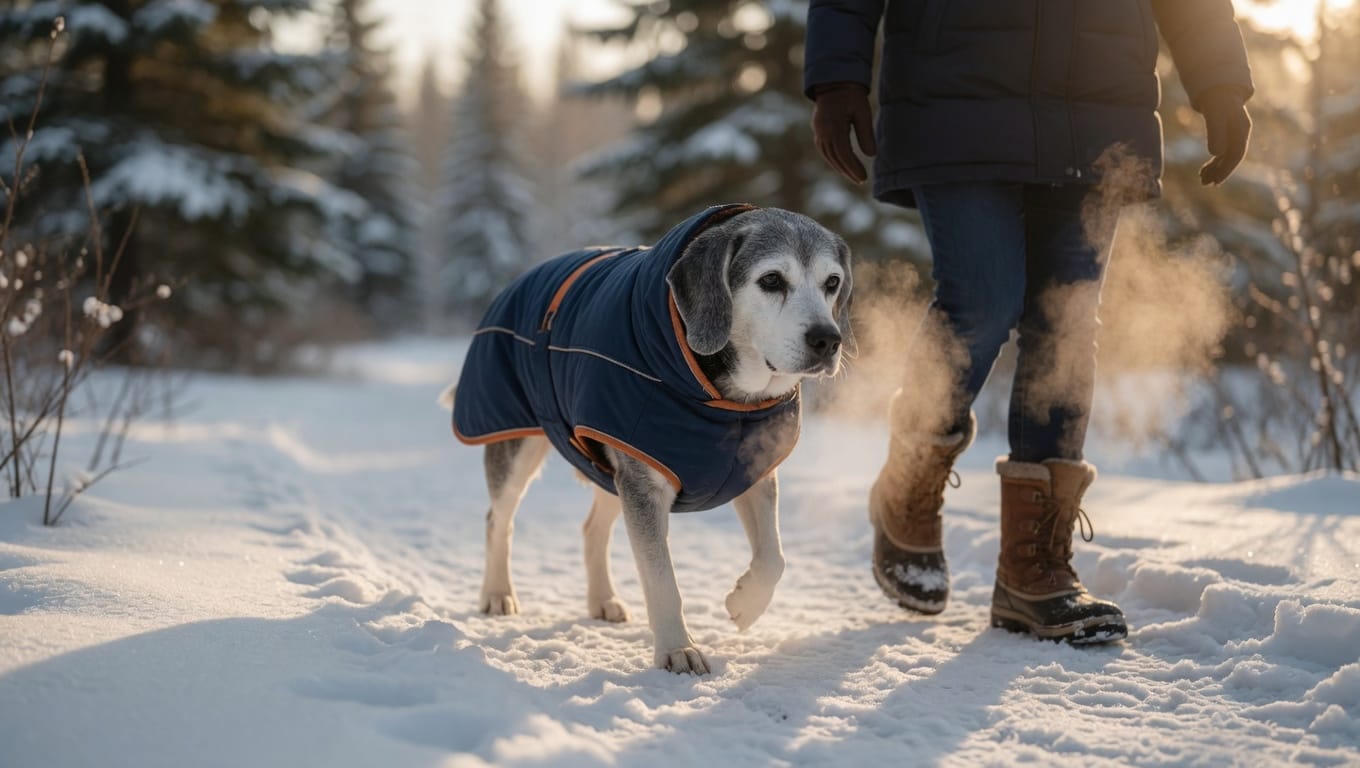
By Paw Pulses · ~10 min read · Updated April 2026
Affiliate disclosure: Some links in this article are affiliate links. If you buy through them, we earn a small commission at no extra cost to you. We only recommend products we'd give our own senior dogs. Full policy: pawpulses.com/affiliate-disclosure.
The first cold morning of the year tells you everything. Your senior dog hesitates at the back door instead of bounding through it. She walks with a stiffer gait for the first hundred feet. She comes back in shivering even though the temperature isn't dramatic. By February, she's spending more time on the heating vent and less time at the window. The dog who used to love a snowy walk now wants the walk to be over.
This isn't softness or stubbornness — a senior dog's body genuinely handles cold less well than it did five years ago. Joints stiffen faster, circulation reaches the extremities less efficiently, the coat traps less heat, and the metabolic furnace that warms a young dog from the inside is running at a lower setting. The same temperature that was a fun adventure at age four can be genuinely uncomfortable — sometimes painful — at age eleven.
The good news: most of the cold-weather problems senior dogs face are solvable with a small set of practical, evidence-aligned interventions. The wrong approach is more comforter on the couch and hoping for spring. The right approach is layering warmth (bed, body, and paws), reducing the cold-stress load on aging joints, and protecting the parts of her that are working hardest to keep her warm.
If you'd rather skip ahead, here are our top picks at a glance:
- Best heated bed: K&H Pet Products Thermo-Lounger Heated Bed — low-watt, thermostat-regulated, machine-washable cover
- Best orthopedic + heated combo: Furhaven Orthopedic Heated Sofa Bed — joint support plus warmth in one bed
- Best winter coat: Carhartt Firm Duck Insulated Coat — durable, real insulation, rugged for active seniors
- Best paw balm: Musher's Secret Paw Wax — original formula, used by sled-dog teams, food-safe
- Best heated water bowl: K&H Pet Products Thermal-Bowl — keeps water from freezing on outdoor porches without overheating
Now the practical guide.
Why senior dogs feel the cold differently
A few things change in an aging dog's relationship to cold weather, and understanding them tells you which interventions actually matter:
1. Joint stiffness amplifies in cold weather. The synovial fluid that lubricates joints becomes more viscous at lower temperatures, which is why arthritis pain in dogs (and humans) reliably worsens in winter. A senior dog with even mild joint changes will feel more discomfort on a 30°F walk than a 70°F one — the cause is the cold, not just the activity.
2. Circulation to extremities decreases. Older cardiovascular systems prioritize core organs over paws and tail tips. The result: paws get colder faster, frostbite risk increases on tail tips and ears, and a senior dog often develops "I'm cold" body language (shivering, hunched back, lifted paws) at temperatures that don't bother a young dog at all.
3. Coat insulation gets less effective. The undercoat that traps warm air becomes thinner with age. Even thick-coated breeds (golden retrievers, German shepherds, huskies) lose insulation efficiency in their senior years. Short-coated and small breeds are especially vulnerable.
4. Body fat distribution changes. Senior dogs often lose lean muscle and don't replace it. Less metabolic tissue means less internal heat production. A dog who used to run hot now runs cool — and you have to add heat from outside.
5. Reduced activity reduces internal heating. A young dog generates significant body heat through movement. A senior dog who naps more and runs less generates less metabolic warmth and chills faster between activity bursts.
These five factors compound. By age ten, a dog who used to thrive in cold weather may genuinely need help getting through a Midwestern winter comfortably.
Heated beds: the highest-impact single purchase
If you only do one thing to help your senior dog through winter, get her a properly-warmed bed. The reason: she sleeps 14–18 hours a day, and a cold sleeping surface is silently leaching body heat for most of those hours. A warm bed conserves the calories her body would otherwise burn just maintaining temperature.
What to look for
- Low-watt heating element (10–20W). Higher wattage isn't safer or warmer — it's a fire and burn risk. Quality consumer heated pet beds use a low, even heat that warms the surface to roughly 10–15°F above ambient room temperature, which is enough to keep an aging dog comfortable without overheating.
- Internal thermostat. The bed should regulate itself, not rely on an external timer. Dogs shift positions in their sleep; a consistent surface temperature matters.
- Removable, washable cover. Senior dogs leak more (drool, urine accidents in deep sleep) than younger dogs. You'll be washing the cover regularly.
- Orthopedic foam, not fluffy stuffing. Fluffy beds provide zero joint support. Senior dogs need at least 4 inches of memory foam or equivalent.
- Chew-resistant cord. If your senior has any history of chewing wires, get a metal-jacketed cord version.
Our picks
K&H Pet Products Thermo-Lounger is a popular pick for seniors who don't have significant joint issues — it's a heated pad-style bed (not a thick orthopedic foam base), with a slightly raised side that lets dogs lean against it, low-watt and well-distributed heating, and a removable washable cover. Good warmth, modest joint support. If your senior already has diagnosed arthritis or hip dysplasia, skip ahead to the orthopedic+heated combo below.
For a senior dog who needs both joint support and warmth, Furhaven Orthopedic Heated Sofa Bed combines a 4-inch memory foam base with the heated insert. It's the better choice for a senior with diagnosed arthritis or hip dysplasia — the joint support matters as much as the warmth.
If you'd rather not run electricity to the bed, self-warming pet beds use a reflective Mylar layer that bounces the dog's own body heat back at her. They work in moderate cold (above 50°F room temperature) and are a reasonable choice for travel or for households nervous about heated electrical products.
Coats and sweaters: which dogs need them, which dogs don't
A common myth: dogs don't need coats because they have fur. The truth: senior dogs with thin coats, lean body composition, or arthritis benefit from coats below 50°F. Thick-coated giant breeds (Newfoundlands, Pyrenees) generally don't.
When a senior dog needs a coat
- Short-coated breeds (greyhounds, whippets, dobermans, beagles, dachshunds, etc.) — below 60°F
- Lean senior dogs — below 50°F
- Senior dogs with arthritis — below 50°F (warmth reduces joint stiffness during walks)
- Any senior dog under 20 lbs — below 50°F
- Any senior dog showing cold body language (shivering, hunched, slow walking) at any temperature
What to look for in a coat
- Insulated, not just water-resistant. A windbreaker keeps wind off but provides no warmth. Real insulation (sherpa, polyfill, down, or synthetic puffer fill) is what matters.
- Belly coverage. A coat that covers only the back leaves the underside exposed — exactly the area where senior dogs lose the most heat. Look for designs that wrap under the belly.
- Easy on/off. Senior dogs lose patience with complex Velcro patterns. Step-in or single-Velcro designs work better.
- Reflective trim if you walk at dawn or dusk — visibility for senior dogs (whose eyesight may be declining) matters more than for young dogs.
Our picks
Carhartt Firm Duck Insulated Coat is a durable, well-insulated option well-suited to active seniors in wet or windy conditions. Heavy-duty cotton duck shell, polyfill insulation, generous belly coverage, simple Velcro closure. Built to last several winters. Sized accurately — measure your dog's chest and neck before ordering.
For smaller seniors in dry, mild-cold, sheltered conditions only (not a wet/windy primary coat), the Frisco Sherpa Lined Reversible Vest is lighter, softer, and easier to put on stiff older dogs. Layer it under a shell coat for any walk in wet or windy weather — alone, it doesn't have wind/moisture protection.
For very cold climates or dogs with thinning coats, Ruffwear Powder Hound Jacket is essentially a high-end winter parka for dogs. Expensive, but excellent at retaining body heat in sustained cold weather.
Paw protection: the part most owners skip
A senior dog's paws take a beating in winter — not just from cold, but from sidewalk salt, ice melt chemicals, and the dryness that comes with indoor heating. Paw pads can crack, split, and become a quiet source of pain that an older dog stops complaining about because she's used to it.
Two interventions, in order of priority
1. Paw balm before walks. A wax-based balm fills the pores in the paw pads and provides a physical barrier against salt and ice. Musher's Secret is the classic — formulated for sled dog teams, non-toxic if licked in small amounts, easy to apply (rub a pea-sized amount into each pad). One application is typically sufficient for a short walk in light conditions; reapply if you're walking through heavy salt or wet snow.
2. Boots for the dogs that tolerate them. Maybe a third of senior dogs will accept boots. The other two-thirds will hate them and remove them within 30 seconds. If yours tolerates them, Pawz disposable rubber boots are the best entry point — they're cheap, simple, and look like balloons (no straps, no Velcro, just a stretch-fit rubber sleeve). Real boots like Ruffwear Polar Trex are warmer and more durable, but the senior dog has to adjust to wearing them, which not all do.
After the walk
Wipe paws with a damp warm cloth to remove any salt or ice melt residue. Check between toes for ice balls (especially important for furry-pawed breeds). If pads look dry or cracked, apply paw balm again before bed — overnight absorption helps healing.
What to skip
Sidewalk de-icers labeled "pet-safe" are still chemicals, and the safest assumption is that all of them irritate paws to some degree. The protection (balm or boots) is what actually keeps her comfortable. Don't rely on the label.
Indoor air: the dryness problem
Forced-air heating dries indoor air dramatically. Most homes drop to 15–25% humidity in winter, well below the 40–50% range that's comfortable for most dogs. Dry indoor air contributes to:
- Itchy, flaky skin (especially common in senior dogs whose skin is already drier)
- Dry nasal passages (which interferes with the dog's primary sense)
- Dehydration that's easy to miss because dogs pant less in winter, removing the visual cue owners often rely on in warmer months
A simple cool-mist humidifier running in the room where your dog sleeps will measurably improve her skin and respiratory comfort over a winter. Aim for 40–55% relative humidity. EPA guidance places meaningful indoor mold risk at sustained humidity above 60%, so there's headroom in the comfortable range.
Hydration in winter: the silent risk
Senior dogs already drink less than young dogs, and winter compounds it. Cold water is less appealing, indoor heating dehydrates, and outdoor water sources freeze. Watch for:
- Decreased water bowl activity. If you used to refill once a day and now once every two days, she's drinking less.
- Drier nose, less saliva, dull coat — all signs of mild chronic dehydration.
Practical fixes
- Add warm (not hot) water to meals — most senior dogs accept this without complaint.
- For outdoor or garage water bowls, a heated pet bowl prevents freezing without making the water uncomfortably warm. Especially important if your senior spends time in a garage, mudroom, or covered porch.
- Bone broth toppers (no-onion, low-sodium) once or twice a week add fluid intake she might otherwise miss.
Exercise modifications for cold weather
A senior dog still needs daily activity in winter, but the form should change.
- Shorter, more frequent walks rather than one long one. Two 15-minute walks beat one 30-minute walk in cold weather — joints stay warmer, fatigue is lower.
- Warm up indoors first. Five minutes of slow movement inside (a few flights of stairs, a lap around the house) before going out reduces the joint shock of stepping into cold.
- Avoid the coldest hours. Mid-day walks (10 AM to 3 PM) are warmer than dawn or dusk.
- Indoor enrichment on the worst weather days. Puzzle feeders, scent games, slow-feeder bowls. Mental stimulation reduces the energy buildup that makes a senior dog restless.
- Watch for over-tiredness. A senior dog who comes back from a walk and sleeps for four hours straight may have done too much. Pull back the next day.
Temperature thresholds: when to keep her inside
Rough guidelines for a healthy senior dog (no respiratory or cardiac issues):
- Above 60°F: Most senior dogs are comfortable with normal walks, no coat needed.
- 45–60°F: Coat for short-coated breeds (greyhounds, beagles, dachshunds) and lean dogs. Most other seniors comfortable in their natural coat.
- 30–45°F: Coat for almost all short-coated breeds and lean seniors. Coat optional but helpful for thick-coated seniors with arthritis. Limit walks to 15–20 minutes.
- 20–30°F: Coat for almost all senior dogs. Booties or paw balm. Walks under 15 minutes.
- 10–20°F: Brief outdoor trips only — bathroom and back. Indoor enrichment for the day's activity.
- Below 10°F or with wind chill: Bathroom only. Carry small dogs out if possible. Don't rely on her to ask to come back in.
For senior dogs with arthritis, kidney disease, or heart conditions, cold tolerance is meaningfully lower — sometimes dramatically so — and individualized thresholds should be set by your vet rather than a generic table. Always err on the warmer side as dogs age.
What to skip (cold-weather products that don't earn their price)
- Booties for indoor use — unnecessary; her paws are fine on the rug.
- Heated pet pads that go on top of furniture — your senior already gravitates to the warmest spot in the house. Adding more heat to her existing bed is more useful than heating a couch she only sometimes uses.
- Sweaters as a substitute for coats in cold or wet conditions — sweaters and sherpa vests provide insulation but no wind or moisture protection. They're fine on their own for mild, dry, sheltered cold; layer them under a shell coat for anything wet or windy.
- "Senior winter formulas" of food — most are marketing. Stay with the food that's been working unless your vet recommends a change.
Track winter wellness changes month over month — Cold-weather senior dogs often shift in ways that compound: stiffer mornings, less appetite at night, longer naps. Hard to spot day-to-day, easy to see on paper. Our Senior Dog Health Tracker is a 5-page printable with daily logs, monthly health snapshots, vet visit history, and a medication tracker. $14, instant download.
A practical winter prep checklist
Run through this in November or whenever your weather turns:
- Heated bed in her primary sleeping location, on and tested
- Coat or sweater that fits, accessible at the door
- Paw balm in stock and used before each walk
- Humidifier running in her sleeping room
- Heated water bowl set up for any outdoor or garage water source
- Walk routine adjusted for cold-weather schedule
- Indoor enrichment options on hand for bad-weather days
- Vet check completed for arthritis flare-ups before the cold sets in (if she has any existing joint issues)
The bigger picture
Winter is the season that tests a senior dog's reserves. The warmth she keeps in, the stiffness she avoids, the comfort she finds at home — these compound into either a manageable winter or a hard one. Most owners try to solve cold weather with willpower and good intentions. The owners whose senior dogs do well in winter are the ones who solved it with infrastructure: a warm bed she sleeps on every night, a coat she wears every walk, balm on her paws, water she'll actually drink, and a routine that respects her aging body's lower tolerance for sustained cold.
None of this is expensive. A heated bed, a good coat, a tin of paw balm, and a humidifier together cost less than a single emergency vet visit for hypothermia or a winter arthritis flare. And the difference she'll feel — in the energy she has, the willingness she has to walk, the comfort she has at home — is the difference between a dog who endures winter and a dog who actually enjoys her old age.
That's worth setting up properly. She's earned it.
If this article was useful, our free Senior Dog Wellness Checklist walks you through a head-to-tail wellness audit you can do at home in fifteen minutes — including a winter-readiness section.
See our full affiliate disclosure for how we choose products and earn commissions.